

 News
News
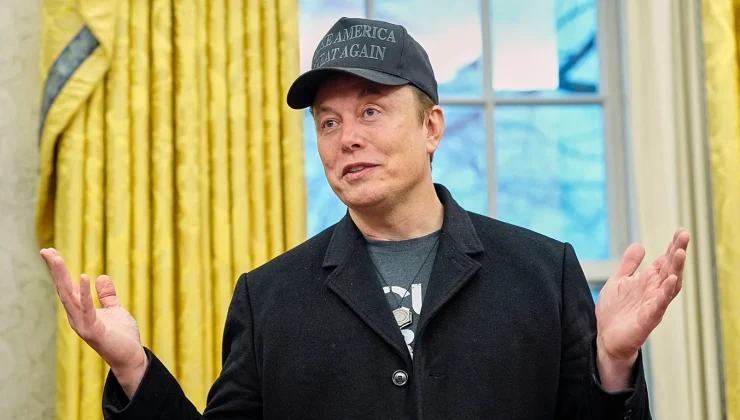
Ukrainian President Volodymyr Zelenskyy awarded tech billionaire Elon Musk the Order of Freedom, one of Ukraine’s most prestigious state honours, months after the SpaceX founder worked with Kyiv to block Russia’s illegal use of Starlink — a move that disrupted Moscow’s battlefield communications and helped slow the Russian advance.
Leer Más
The decree, published on Ukraine’s presidential website on Wednesday, cited Musk’s “outstanding personal merits in protecting human life and freedom” and his contribution to relations between Ukraine and the US.
The award marks a striking turn in the complicated relationship between Musk, Ukraine and the country’s leadership, as Kyiv is critically dependent on his satellite technology amid repeated disagreements over the war and Musk’s increasingly sharp criticism of Zelenskyy.
Musk’s Starlink has been crucial to Ukraine since the first days of Russia’s full-scale invasion, providing communications for civilians, government institutions and the military after conventional networks were damaged or destroyed.
Musk activated the service over Ukraine in February 2022 after an appeal from then-Digital Transformation Minister Mykhailo Fedorov.
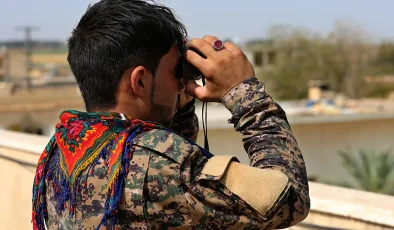
Tens of thousands of terminals have since become central to Ukrainian battlefield communications and increasingly to the operation of drones.
But Russian forces also found ways to obtain Starlink terminals illegally, despite SpaceX saying it did not sell the service in Russia or do business with the Russian government or military.
By early 2026 Kyiv officials said Russian forces were increasingly mounting the terminals on attack drones, giving operators a resilient connection that allowed the UAVs to fly at low altitude, resist electronic warfare and be controlled over longer distances.
Kyiv appealed directly to SpaceX in February, and Musk responded publicly to Fedorov as Ukrainian and SpaceX engineers worked on measures to prevent Russia’s unauthorised access.
The intervention underscored the extraordinary role Musk and his companies have come to play in a war in which satellite communications are deeply integrated into military operations.
Musk’s turbulent relationship with Ukraine
Although Musk provided Starlink to Ukraine at a critical moment in 2022, disagreements soon emerged over how far the technology should be used in Ukrainian military operations.
Musk repeatedly argued that Starlink was intended to provide communications rather than facilitate long-range attacks and has repeatedly said that its use in strikes on Russian targets could escalate the war.
His restrictions had direct consequences on the battlefield.
According to the 2025 media investigation, Musk ordered Starlink coverage shut down in parts of Russian-occupied Ukrainian territory during Kyiv’s 2022 counteroffensive, disrupting Ukrainian military operations.
A separate controversy surrounded Crimea. Musk rejected a Ukrainian request to activate Starlink around Sevastopol for Ukraine’s operations against Russia’s Black Sea Fleet, saying he feared SpaceX would otherwise become “explicitly complicit in a major act of war and conflict escalation”.
The disagreements later became increasingly political.
Musk repeatedly questioned continued Western support for Ukraine and argued that Kyiv should seek a negotiated end to the war.
He also criticised Zelenskyy directly and backed calls for Ukraine to hold elections despite martial law, under which national elections have been suspended since Russia launched its full-scale invasion in February 2022.
The issue became particularly explosive after US President Donald Trump returned to the White House and began pressing Kyiv over elections while seeking to negotiate an end to the war with Moscow.
Leer Más
Mobilisation fears grip Russians as Moscow’s forced rec…
New Starlink requests from Kyiv
Kyiv has continued to work closely with SpaceX despite Musk’s criticism.
Starlink remains deeply embedded — and irreplaceable — in Ukraine’s military communications, while its integration into drones has given Ukrainian forces a more resilient means of controlling unmanned systems in areas where conventional radio links are vulnerable to Russian electronic warfare.
The technology has become particularly important for strikes in Russian-occupied Ukraine, where Ukrainian forces have increasingly used drones to attack logistics routes, command positions and other military targets far behind the front line.
Ukraine is now seeking Musk’s approval to extend the use of Starlink-equipped drones for strikes deep into Russia’s territory.
Kyiv believes the technology could allow its forces to hit mobile Russian and North Korean ballistic-missile launchers when they move into firing positions, potentially giving Ukraine another means of countering one of the most difficult threats facing its air defences.
Musk has refused to approve it so far.