


 News
News
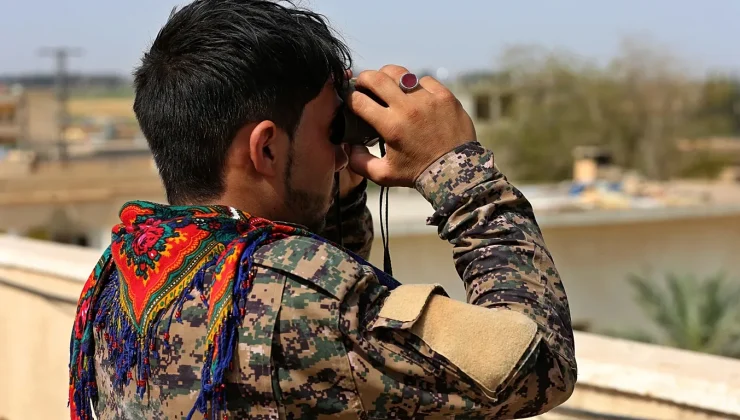
The Syrian Democratic Forces (SDF) dissolved on Tuesday after their commander announced the completion of their integration into the Syrian army, ending the existence of the Kurdish-led force that served as Washington’s main partner against the so-called Islamic State group in Syria and once controlled a vast autonomous zone in the country’s northeast.
“We announce today the end of the mission of the Syrian Democratic Forces and declare, with full responsibility, their dissolution as an independent military force,” Mazloum Abdi said in a televised speech at the presidential palace in Damascus, following meetings with President Ahmad al-Sharaa.
The SDF was formed in 2015 at US instigation to fight the IS group, drawing primarily on the People’s Protection Units, known by its Kurdish initials YPG, the main armed force of Syria’s Kurdish community.
At its peak, the SDF controlled a de facto autonomous zone across much of northeastern Syria, including significant oil and agricultural land.
Turkey regards the YPG as the Syrian branch of the Kurdistan Workers’ Party, or PKK — designated a terrorist organisation by Turkey, the US, the EU, the UK and France — and has conducted multiple military operations against it inside Syria.
The integration is part of an agreement reached on 29 January, which stipulated a ceasefire and a gradual transfer of SDF-affiliated military and civilian institutions to Syrian state control, including border crossings, oil and gas fields, prisons and camps housing IS detainees.
The SDF lost most of the territory it controlled in northeastern Syria to a Syrian government offensive in January before signing the deal. After clashes in Aleppo in December 2025, it had already withdrawn from west of the Euphrates.
On 16 January, al-Sharaa signed a decree guaranteeing Kurds’ national rights, recognising Kurdish as a national language, declaring Nowruz an official public holiday, and granting citizenship to Kurds previously denied legal status.
The US described the broader integration deal as “historic”.
Abdi said the dissolution marked the beginning of “a genuine transition from battlefields to the fields of construction, and from an era of weapons to an era of peace.” He added that political efforts would intensify to ensure Kurdish rights were enshrined in the Syrian constitution.
Another win for al-Sharaa
The dissolution is a significant achievement for al-Sharaa, who has been working since taking power after Bashar al-Assad’s fall in December 2024 to consolidate state authority across all Syrian territory and integrate previously autonomous or rival armed factions under the Defence Ministry.
Following Abdi’s announcement, the Syrian authorities announced an agreement with “all armed factions” to dissolve them and integrate them under the ministry.
The new Syrian army includes factions previously backed by Turkey that fought Kurdish forces for years, making the integration politically delicate.
Turkey, which shares borders with Syria and has long sought to prevent the establishment of a Kurdish autonomous zone on its southern flank, has been closely watching the process.
PKK leader Abdullah Öcalan, who has been held in Imrali Island prison in Turkey since 1999 and communicates only through heavily restricted channels, said the SDF-Damascus integration agreement would “ease and accelerate” what he called the “Turkey without terror” process.
He described the situation in Syria as “a clear reflection of the need for democratisation” and called on Turkey to play a “facilitating, constructive and open to dialogue” role in the process.