

 News
News
First, a scoop: My colleague Vincenzo Genovese reports that US President Donald Trump’s son-in-law Jared Kushner called for a radical overhaul of financial support for Gaza while addressing a closed-door meeting of the Palestine Donor Group in Brussels, in which European and Arab delegates pledged a nearly €900-million recovery package
Speaking via video last week, Kushner dismissed the Gaza aid initiatives carried out so far as “designed step by step by NGOs and terrorists”, and called for a fundamental shift in approach to “turn the tide”, according to people familiar with the content of the private talks consulted by Euronews.
Kushner is a key figure on the Board of Peace, the controversial body chaired by the US president that is expected to oversee Gaza’s reconstruction. The European Commissioner for the Mediterranean, Dubravka Šuica, triggered outrage in February when she travelled to Washington for a meeting of the Board, despite the Commission having expressed doubts over its compatibility with the UN charter. Vincenzo has the details in this exclusive story.
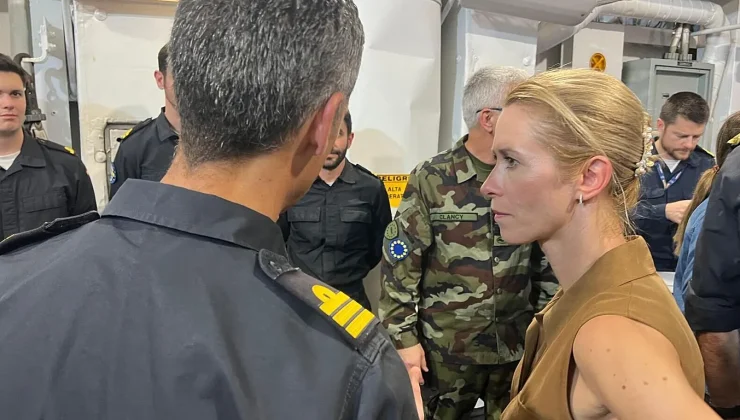
A postcard from Djibouti: Our special correspondent Toby Gregory, who was embedded with the EU’s naval mission Aspides this week during foreign policy chief Kaja Kallas’s official visit, writes in from the Bab el-Mandeb. It’s a tiny country that carries an outsized load: sitting on the narrow gateway where much of the world’s shipping passes within sight of Yemen, and where Houthi drones and missiles have turned one of the busiest trade routes on earth into a front line.
For Europe, this stretch of water is where the abstract worries of Brussels – energy, trade and security – become suddenly and physically real.
Why the visit mattered comes down to timing and signal. With the Red Sea still under threat and Europe increasingly anxious about who controls the world’s critical waterways, Kallas travelling to Djibouti in person was Brussels planting its flag: a declaration that the EU intends to be a security actor in its own right, not a bystander reliant on others. Kallas oversaw the signing of a new EU-Djibouti Status of Forces Agreement, the legal framework that lets European forces operate from Djiboutian soil.
It sounds like paperwork, but it is a statement of intent, cementing a European foothold in a country that already hosts American, French, Japanese and Chinese bases within sight of one another. In a region where everyone is jostling for position, Brussels has just secured its place at the table. Watch Toby’s report on today’s episode of Europe Today.
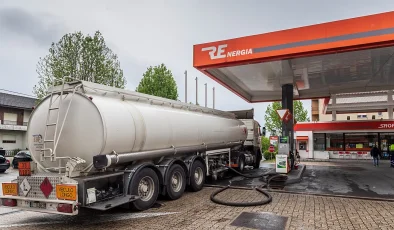
A Greek tragedy: Meanwhile, negotiations over the 21st package of sanctions against Russia are stuck on LNG, Jorge Liboreiro, back from Kyiv, writes in to report. Greece, which hosts a powerful maritime industry, has raised serious questions about a ban on Russian LNG scheduled to take full effect on 1 January 2027. The ban, we must say, was agreed last year and is unrelated to the draft package on the table.
The key issue for Greece isn’t the purchase of Russian LNG itself but the transfer of this merchandise to non-EU countries, which the ban also intends to prohibit as of January next year. Athens argues that prohibiting transport won’t dent Russia’s war chest because Moscow will simply find other willing operators, particularly from China, to take on the job that Greek-owned vessels perform today.
The fact that Athens is trying to reopen an issue that became law in October 2025 is rubbing diplomats the wrong way. For now, the goal is to find a compromise that can satisfy Greece without setting a dangerous precedent that would encourage other capitals to revisit past decisions.
Russian soldiers ban in limbo: Meanwhile, the entry ban on Russian soldiers has been downgraded yet again. The latest version indicates an intention to continue working to make the ban fully implementable in practice, without imposing an obligation of enforcement. In other words, it won’t happen until member states are convinced it will be effective.
A similarly ambivalent wording has been used to placate Austria over its contentious request to lift sanctions on Rasperia to offset a €2.1 billion loss incurred by Raiffeisen Bank International in Russia. Ambassadors intend to promise Vienna to find a solution at a later stage. It’s not a “yes”, but it isn’t a “no” either.
Meanwhile, we’re expecting a raft of announcements from the Commission today…
EU states to be scored on rule of law: First, the Commission will issue its annual assessment of member states’ and four candidate countries’ compliance with the rule of law, rating a range of indicators from media freedom to corruption to a free judiciary.
Hungary has often been considered the worst student, attracting sharp criticism in all editions of the report since the initiative was launched in 2020. But according to Daniel Freund, a leading Member of the European Parliament (MEP) on the issue, “Hungarian voters have solved some of this” with the election of Péter Magyar in April, and this year’s review should be more positive.
“I would say my biggest worry at the moment is Slovakia,” Freund also told my colleague Angela Skujins, citing Bratislava’s recent “dismantling” of the Special Prosecutor’s Office and National Crime Agency. “(These) legal changes allow already convicted corrupt people to walk free or for their investigations to be stopped,” he explained.
The European Commissioner for Justice Michael McGrath, who is set to unveil the assessments later, told Euronews that the report’s purpose “is not simply to identify where problems exist, but to help build a stronger culture of respect for the rule of law across Europe.”
“Ultimately, the rule of law is about much more than laws. It is about trust — trust that governments are accountable, that justice is independent and impartial, that rights are protected and that everyone is treated equally. It is the foundation on which our freedoms, our prosperity and our European way of life depend,” the Commissioner said.
ETS, the acronym of the day: Also to be unveiled today, the EU executive’s long-awaited plans to reform the bloc’s carbon market, known as the Emissions Trading System (ETS), to align it with the 2040 climate goals, my colleague Marta Pacheco reports.
Essentially, the ETS is the EU’s mechanism for making companies pay for their pollution. Today’s reform is expected to require heavy industries to increase their efforts to decarbonise — even if they will still be allowed to use free polluting credits to help them cope with the climate transition. Today’s proposal is expected to trigger months of political infighting and lobbying over the details of the plans.
Brussels is also today proposing network charges and tax reforms to make electricity cheaper than gas, as pledged by Ursula von der Leyen and António Costa in March, in response to industry calls that blame high electricity prices on a lack of competitiveness.
The much-touted electrification plan is also set to announce a new target to electrify the bloc’s economy by 2040 and cut reliance on imported fossil fuels. Buildings, which account for around half of the EU’s gas consumption, were identified as a key priority, according to a senior Commission official. The Commission plans to encourage wider adoption of heat pumps, improve transparency around installation costs, and make better use of existing funding mechanisms to support low- and middle-income households.
Zelenskyy scrambles to contain defence fallout amid wartime cabinet shake‑up
Ukraine’s parliament has endorsed an almost entirely new wartime cabinet, appointing Naftogaz chief Sergii Koretskyi as prime minister to help steer energy resilience and EU integration under Volodymyr Zelenskyy’s reshuffle, my colleague Sasha Vakulina reports.
His appointment comes against a backdrop of street protests over the dismissal of defence minister Mykhailo Fedorov and a dramatic public rift inside Ukraine’s military leadership.
In a bombshell press conference, Federov accused commander‑in‑chief Oleksandr Syrskyi of blocking reforms, fuelling divisions and “splitting the country”, saying Zelenskyy had effectively chosen to keep Syrskyi over him.
The developments lay bare painful internal strain, as Zelenskyy scrambles to contain what is now a very public scandal between a reform‑minded former defence minister, widely supported by military and civil society, and the army chief at the heart of Ukraine’s war effort.
Demonstrations are set to continue on Friday. What began as anger over Mykhailo Fedorov’s dismissal has swelled into broader outrage over the president’s management of the military, with protesters saying they do not feel heard and demanding proper changes at the top command.
More from our newsrooms
When Messi met Yamal: The master and apprentice story behind the World Cup final. In 2007, at a UNICEF charity event, Messi bathed five‑month‑old Lamine Yamal in the Camp Nou dressing room. Nineteen years later they will meet in the 2026 World Cup final: Spain v Argentina at MetLife Stadium in New Jersey. Cristian Caraballo has the full read.
‘The tide is turning’: Inside Ursula von der Leyen’s trip to Kyiv. Ursula von der Leyen’s latest visit to Kyiv captured a shift in momentum, Jorge Liboreiro writes, just back from Kyiv. The battlefield has moved to the skies and accession is yielding tangible results. “The tide is turning,” she declared. Read.
‘China’s model is flawed’: top MEP says trade pressure could test Beijing’s stability. In an interview with Euronews’ Peggy Corlin, German liberal MEP Engin Eroglu, chair of the European Parliament’s delegation for relations with China, said the EU’s market of 450 million consumers gives the bloc leverage over Beijing and challenges China’s claim to global dominance. More.
We’re also keeping an eye on
- EU justice and home affairs ministers gather for an informal meeting in Dublin, Ireland
- European Commissioner for Financial Services Maria Luís Albuquerque to make an announcement on the competitiveness of the banking sector
That’s it for today and for this week. We’ll be back on Monday. Toby Gregory, Sasha Vakulina, Jorge Liboreiro, Angela Skujins, Marta Pacheco, Vincenzo Genovese and Peggy Corlin contributed to this newsletter.