


 News
News
The true price of the European heatwave and drought, as well as the consequent wildfires, only surfaces in public accounts months later.
Once the fires are out and the rivers refill, finance ministries are left compensating farmers, rebuilding roads and rail, propping up health services and absorbing revenue a slowed economy never generated.
That burden is outpacing the reserves governments hold against it and this year’s stress is severe.
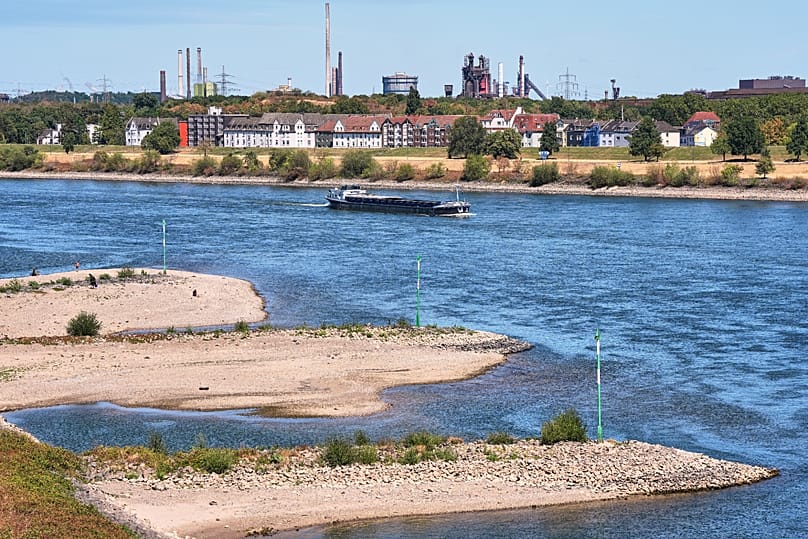
Half of the EU and the UK was under drought in late July, 9% at the most extreme “alert” stage, according to the Copernicus European Drought Observatory, while the rivers Loire, Po, Rhine and Danube touched record lows in August.
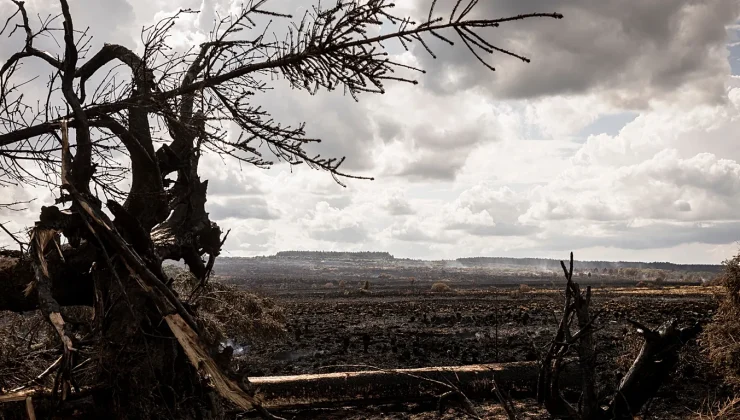
Wildfires had burnt more than 505,000 hectares by early August, according to the European Commission’s Joint Research Centre, outpacing the same point in 2025, the worst year on record.
Extreme weather caused €822 billion in direct losses across the EU between 1980 and 2024, a quarter in the final four years, as per the European Environment Agency (EEA).
Asked by Euronews whether that concentration marked a genuine break with the past, the agency was unequivocal. “This is a step change,” it said, explaining that it smooths volatile annual figures using a 30-year moving average to isolate the trend.
“The trend for the European economic loss data shows an increase of 3.4% per year and we have seen it accelerating in the data. First estimates of 2025 show that the trend will further accelerate.”
Only about a fifth of those losses were insured, and for droughts, heatwaves and wildfires coverage collapses to 10% or 11%.
The reason, the EEA told Euronews, is that these hazards “mostly relate to indirect losses, such as reduced agricultural yields, loss of life, ecosystem degradation, lost working hours… and these are often difficult to assess”.
“The insurance protection gap is increasing, meaning that the rise in total losses is not supported by more insurance,” the EEA added.
That leaves governments as the insurer of last resort. However, only four EU member states, Austria, France, Hungary and Italy, maintain dedicated disaster funds as the rest rely on ad-hoc reallocations that disburse slowly.
To make matters worse, European money offers little cushion. The Brussels-based economic think tank Bruegel puts EU disaster funding for 2028-2034 at roughly €5 billion, equal to 10% to 15% of the damage from the 2021 western European floods alone.
Governments miscalculate the bill
France has produced the boldest number. Opening a drought crisis meeting on 12 August, Ecological Transition Minister Monique Barbut estimated this summer’s heatwaves would cost €10 billion to €15 billion in direct and indirect costs, between 0.3% and 0.5% of GDP against a growth forecast of just 0.7%.
The figure, however, was immediately contested.
The national statistics institute INSEE, to which it was initially attributed, denied having produced any such projection. The ministry then clarified the extrapolation was its own, drawn from INSEE data for previous years, and Barbut conceded the numbers needed treating with caution.
In Spain, roughly 172,400 hectares had burnt by late July, about half of last year’s total. Applying the per-hectare costs used by the Navarre forest agency and industry association Asemfo puts firefighting alone at €1.7 billion to €3.3 billion, before restoration, which forestry engineers say typically costs more than putting the fires out.
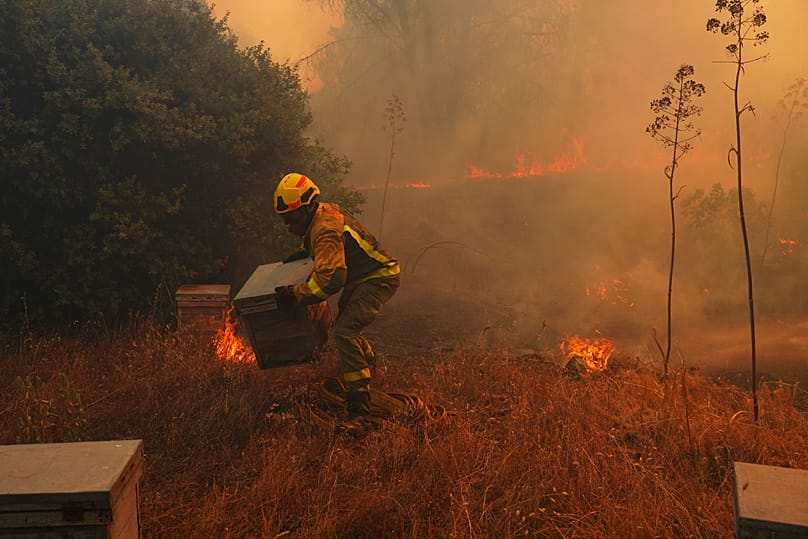
Brussels approved €120.55 million in emergency aid for Spain last month, covering only damage from the previous summer.
Portugal illustrates the deeper problem of the lack of appropriate calculations for the real costs of the wildfires.
Its civil protection authority has acknowledged publicly it “is not possible to determine, rigorously, the total cost of a specific occurrence” because financial and operational data sit in separate systems.
An independent commission investigating the August 2025 fires received an aggregate figure of about €18.8 million that could not be broken down by fire. The national audit court flagged the same gap in 2021.
Capturing indirect costs properly, the EEA told Euronews, would mean combining event records with “labour, health, transport, energy, agricultural and macroeconomic data provided by the sector organisations.”
Revenue that never arrives
Spending is only half the equation.
Bruegel’s review of the evidence finds economies still smaller years later, with GDP 1.5% lower two years after a heatwave and 3% lower four years after a drought. The 2022 drought alone cut EU per-capita GDP growth by 1.35%, a €203 billion loss.
For this summer, Triodos Bank puts the cost of extreme heat to EU economies at around €180 billion, roughly 1% of output.
Yet the immediate hit can look surprisingly mild.
Oxford Economics calculates record-low Rhine levels could shave 0.2% off German third-quarter growth but sees no wider collapse.
“This is more about offsets elsewhere in the economy,” Tomas Dvorak, senior economist at Oxford Economics, told Euronews, pointing to defence manufacturing, transport equipment, retail and consumer services.
Summer factory shutdowns also lower capacity utilisation. “The Rhine is a major transport and logistical artery, but it ultimately only affects a small portion of the economy,” Dvorak explained.
Food is where the damage surfaces, slowly.
The European Commission has cut its EU olive oil production forecast by 5%, driven by an 18% fall in Greece, while Spain expects its cereal harvest to fall from 24 million tonnes to little over 18.5 million. Oxford Economics expects heat and drought to add up to 1% to eurozone food inflation next year.
“This is simply how pricing works for food,” Dvorak explained to Euronews. “It follows a sort of cascade from commodities to agriculture, processing and finally retail. Each step tends to take a month or two to filter,” he added.
Forecasters have stopped treating these summers as anomalies. Oxford Economics has already built the costs into its baseline, with medium-term food inflation projected to average around 2.5%.
The danger is also that these pressures compound.
Bruegel describes a “climate sovereign doom loop” in which disaster losses depress growth and tax receipts, widening deficits and raising borrowing costs, leaving less room for the prevention spending that would limit the next disaster.
The ECB calculates a one-in-25-year drought would put nearly 15% of eurozone output at risk.
Yet, EU adaptation spending runs at about €29 billion a year against estimated needs of €35 billion to €500 billion, even though the UN estimates every euro spent returns up to ten in avoided losses.